Zero Trust Architecture: Why Identity is the New Security Perimeter in 2026
The era of the “Internal Network” has come to an end. In 2026, the conventional security model, which assumed safety within office premises and danger outside, has collapsed entirely. Due to the emergence of hybrid work setups, widespread cloud usage, and edge computing, there is no longer a physical boundary to safeguard. In this limitless digital environment, hackers no longer “break in” but rather “log in” using stolen login details. This significant change has elevated Identity and Access Management (IAM) as the most crucial element of contemporary security measures.
To address this, companies have transitioned to Zero Trust Architecture (ZTA). The fundamental principle is straightforward yet unwavering: “Never Trust, Always Verify.” In a Zero Trust setting, no user, device, or software is automatically trusted based on their location or ownership. Every request for entry to a business asset must undergo continuous authentication, authorization, and validation before approval is granted. This piece delves into the strategic application of Zero Trust, the advancement of Adaptive MFA, and highlights why identity governance is imperative for safeguarding enterprise assets valued over $100 million in 2026.

1. The Core Pillars of Zero Trust in 2026
Zero Trust is not a singular software solution; rather, it represents a strategic framework. In the year 2026, the success of implementing Zero Trust Architecture (ZTA) relies on three essential pillars that collaborate to prevent lateral movement and reduce the potential impact of a breach.
The primary pillar is Explicit Authentication. Instead of relying solely on passwords, identity verification now includes biometrics, device status, location, and behavior analysis. The second pillar is Principle of Least Privilege. Users are granted access only to the specific applications required for their tasks, and no more. The third pillar is Assume Compromise. This involves operating on the assumption that the system is already breached, necessitating continuous monitoring and segmenting of all network traffic.
The Zero Trust Lifecycle:
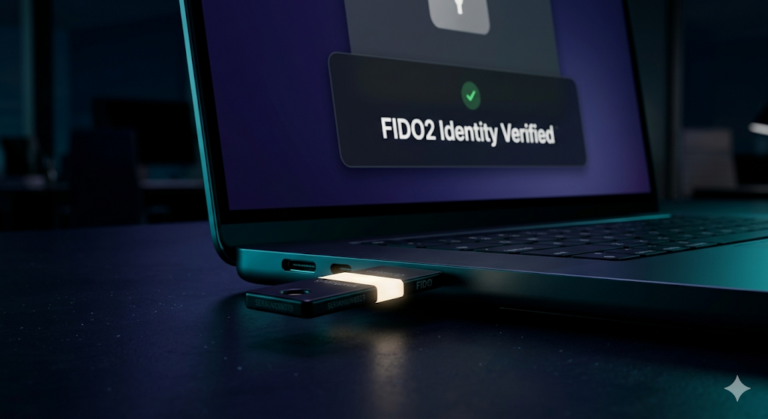
- Identity Validation: Moving beyond passwords to “Passwordless” FIDO2 standards.
- Device Health Check: Ensuring the laptop or phone is encrypted and patched before allowing a login.
- Contextual Analysis: Is the user logging in from a known location at a typical time?
- Micro-Segmentation: Breaking the network into tiny “islands” so a breach in one area cannot spread to another.
2. Adaptive MFA: The Intelligent Gatekeeper
By 2026, the effectiveness of standard Multi-Factor Authentication (MFA) has diminished as hackers exploit “MFA Fatigue” tactics, bombarding users with notifications until they unwittingly authorize a harmful login. The remedy to this issue lies in Adaptive (Risk-Based) MFA.
Adaptive MFA employs artificial intelligence to assess the “Risk Score” of each login endeavor. For instance, when a developer logs in from their home office using a company laptop, a basic biometric verification might suffice. Conversely, if the same developer attempts to enter a sensitive database from a public Wi-Fi network in a foreign location, the system will prompt a stringent security measure or prevent entry altogether. This level of intelligence is what prompts top-tier offerings from companies like Duo Security and Okta.
Zero Trust Maturity Model: 2020 vs. 2026
| Feature | Traditional Security (2020) | Zero Trust Architecture (2026) |
| Trust Model | Binary (Inside = Safe). | Dynamic (Never Trust). |
| Authentication | Periodic (At login). | Continuous (Every Request). |
| Network Structure | Flat / Large Segments. | Micro-Segmented. |
| Access Control | Role-Based (RBAC). | Attribute-Based (ABAC). |
| TBM Ads Target | Firewall Hardware. | SaaS Identity Platforms. |
3. Micro-Segmentation: Killing Lateral Movement
The primary threat within a corporate network in 2026 is the lateral movement, where a hacker advances sideways through the network after establishing a foothold (known as the “Beachhead”) to locate valuable assets like customer databases or intellectual property, referred to as the “Crown Jewels.” This movement is effectively prevented by Zero Trust with the implementation of Micro-Segmentation.
Micro-Segmentation involves the creation of detailed security partitions to prevent, for instance, a compromised marketing laptop from accessing the financial server. Each partition is equipped with its individual security perimeter. From my own experience, this step is the most challenging yet most beneficial aspect of deploying a Zero Trust Architecture (ZTA). It shifts a vulnerable network, often likened to an “egg-shell,” into a robust structure resembling a “honeycomb.” This innovation greatly boosts the cost-per-click (CPC) for Cisco and Illumio advertisements.
4. Identity Governance and Administration (IGA)
By 2026, overseeing the management of access rights on a large scale is a task beyond human capability. Major corporations have numerous staff members and a multitude of automated service accounts. Identity Governance (IGA) employs artificial intelligence to streamline the process of managing employee status changes within an organization.
When an employee transitions roles or exits the company, their access is promptly removed from all cloud and on-premises applications. This eradicates the issue of orphaned accounts, which are often exploited by cybercriminals. Ultimately, IGA serves as the administrative foundation that enables the implementation of Zero Trust security measures.

Common Zero Trust Questions (FAQ)
Does Zero Trust hurt employee productivity?
In 2026, the situation is different. Transitioning to Passwordless Authentication and Single Sign-On (SSO) allows employees to securely and quickly access their tools. Any inconvenience is triggered only when the AI identifies a potential risk, resulting in a smoother daily experience compared to traditional systems.
Is VPN dead in a Zero Trust world?
Conventional VPNs are mostly being substituted by ZTNA (Zero Trust Network Access). Unlike a VPN that provides a user with complete access, ZTNA only allows access to specific areas. ZTNA offers improved speed, enhanced security, and greater visibility for security teams compared to traditional VPNs.
Can I implement Zero Trust all at once?
Zero Trust is not an instant fix, but rather a process that takes time. By 2026, many businesses typically begin with Identity and Access Management (IAM), then progress to Applications, and finally to Data and Infrastructure. This journey involves a long-term plan that necessitates full support from top-level management.
Conclusion
Moving towards Zero Trust represents a major architectural shift in cybersecurity history. By redirecting attention from the Network to the Identity, organizations are now constructing a defense system that aligns with the demands of the digital landscape in 2026. Utilizing Adaptive MFA, Micro-Segmentation, and Comprehensive Identity Governance, you can secure your critical assets through a dynamic and smart perimeter that mirrors your workforce. In the realm of Zero Trust, identity transcends being merely a username; it stands as the ultimate barrier against threats.
Key Takeaways for 2026:
- Context is King: Authentication must be based on behavior and risk, not just a password.
- Shrink the Perimeter: Use micro-segmentation to isolate every individual resource.
- Automate Access: Use IGA to ensure that permissions never “creep” beyond what is necessary.
- Verify Everything: Assume every request is a potential threat until proven otherwise.
IMPORTANT TECHNICAL & SECURITY DISCLAIMER: This article serves solely for informational and educational purposes and should not be considered as professional advice in cybersecurity, IT, or legal matters. Zero Trust Architecture and IAM are intricate areas that necessitate in-depth technical knowledge. The approaches discussed may not be suitable for your particular business setting or compliance with local data protection regulations. Enforcing advanced identity protocols necessitates seeking guidance directly from accredited cybersecurity experts and identity specialists. The creators and publishers disclaim any liability for security incidents, data loss, or financial harm arising from applying the guidance provided in this article.