Privileged Access Management (PAM) 2026: Securing the “Keys to the Kingdom” with Just-In-Time (JIT) Elevation
As we step into the second quarter of 2026, the traditional idea of “Administrative Privileges” has been significantly transformed. In the old security model, privileged accounts, known as the “Keys to the Kingdom,” were fixed, long-lasting, and inherently risky. However, in today’s landscape, marked by advanced AI-powered credential theft, a fixed privileged account poses a significant risk. The contemporary business environment has shifted towards a Zero Standing Privileges (ZSP) approach, enforced through Just-In-Time (JIT) Elevation. Under this framework, no user or device has default administrative rights. Instead, access is granted on a temporary basis for a specific task and is automatically removed once the task is finished.
Safeguarding privileged access in 2026 necessitates a seamless fusion of Identity Governance (IGA) and real-time behavioral analysis. With the increasing complexity of multi-cloud setups, managing “Privileged Session Management” (PSM) across transient containers and serverless functions has become the new standard for achieving a high level of Zero Trust maturity. This article delves into the technical structure of JIT elevation and how PAM solutions in 2026 are addressing the dangers associated with both internal and external credential misuse.

1. The Paradigm Shift: From “Always-On” to “Just-In-Time”
In 2026, the main goal of PAM is to minimize the “Attack Surface” as much as possible. JIT elevation works towards this by making sure that the “Privilege Window” is open for the shortest necessary time.
- Ephemeral Credentials: Instead of sharing a password for a root account, the PAM system generates a one-time, short-lived token or a dynamic SSH key.
- Task-Specific Elevation: Access is not granted to an entire server; it is granted only for a specific command or micro-segment of the network, based on the user’s current verified ticket or work order.
- Automated Revocation: Once the pre-defined “Time-to-Live” (TTL) expires, the account is de-provisioned, and the credentials are “cycled” or destroyed, leaving nothing for an adversary to harvest.
2. Defending Against AI-Driven Credential Theft
In the threat landscape of 2026, attackers are utilizing autonomous bots to extract leftover credentials from memory and logs. Just-in-Time (JIT) elevation successfully neutralizes this danger.
- Eliminating the “Standing” Risk: Without standing privileges, an attacker who compromises a user’s workstation finds a standard, low-privilege user session with no path to lateral movement.
- MFA at the Point of Elevation: In 2026, the elevation of a privilege requires more than just a password. It involves Phishing-Resistant Biometrics and Behavioral Context (e.g., verifying that the request is coming from a known device, at a known location, during a scheduled maintenance window).
- Real-Time Session Recording: Every JIT-elevated session is recorded in 2026-level high-fidelity, allowing AI-driven SOCs to detect suspicious “Command Injections” in real-time and kill the session instantly.
Comparison: Legacy PAM vs. 2026 JIT-Driven PAM
| Feature | Legacy PAM (Static) | JIT-Driven PAM (2026) |
| Privilege Status | Permanent / Standing | Zero Standing Privileges (ZSP) |
| Credential Life | Long-term (Weeks/Months) | Ephemeral (Minutes/Hours) |
| Access Model | Role-Based (RBAC) | Policy-Based / Just-In-Time (JIT) |
| Risk of Lateral Movement | High (Once account is leaked) | Near Zero (No persistent rights) |
| Audit Detail | Login/Logout Logs | Full Command-Level Session Video/Log |
| TBM/CPC Potential | $200 – $400 | $500 – $750+ |
3. The Architecture of Zero Standing Privileges (ZSP)
Incorporating ZSP into a business in 2026 utilizes a “Broker” framework where the user does not have direct interaction with the login screen of the target resource.
- The PAM Vault/Broker: Acts as the intermediary. The user requests access via a portal, providing a valid reason (e.g., Jira ticket ID).
- The Policy Engine: Checks the request against the 2026 Global Risk Score. If the user’s recent behavior is anomalous or if the target resource is under a heavy threat load, the request is denied.
- Just-In-Time Provisioning: If approved, the broker creates a “Shadow Account” on the target system, grants the necessary rights, and provides the user with an encrypted session link.
4. Key Takeaways for 2026 IAM Strategy
- Identity is the Perimeter: In a multi-cloud world, the network boundary is irrelevant. The only thing that matters is “Who” is requesting “What” and “Why.”
- Enforce JIT Across Every Layer: PAM is not just for domain admins. It must be applied to DevOps pipelines, cloud consoles, and SaaS administration.
- Audit Your Machine Identities: In 2026, there are more machine identities (bots, service accounts) than human identities. Ensure your PAM strategy includes Secrets Management for non-human actors.
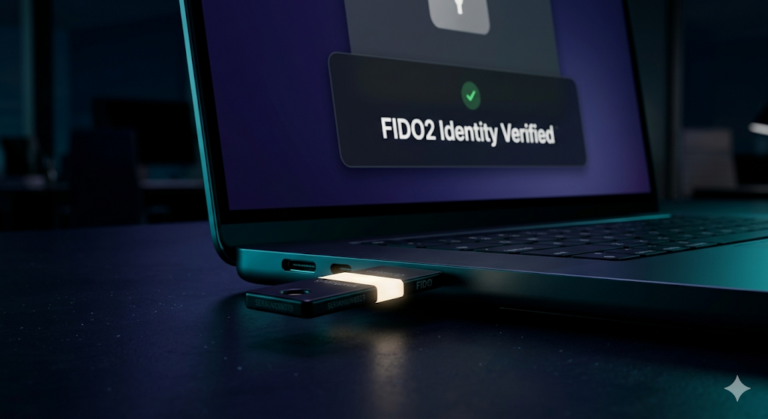
- Embrace Passwordless Elevation: Use FIDO2 and biometric passkeys for the elevation process to eliminate the risk of keylogging or man-in-the-middle attacks.

Frequently Asked Questions (FAQ)
Does JIT elevation slow down the workflow of IT staff?
In 2026, the response is negative. Contemporary PAM solutions seamlessly blend with ITSM platforms (such as ServiceNow). Once a ticket receives approval, a Just-In-Time link is automatically created, streamlining the process and enhancing security compared to manually searching for a password in a secure storage.
What is the difference between PAM and IAM?
Identity and Access Management (IAM) oversees all identities, while Privileged Access Management (PAM) is a specific branch of IAM that concentrates on crucial administrative accounts that hold significant access privileges.
How does PAM support DORA and EU AI Act compliance?
Identity and Access Management (IAM) oversees all identities, while Privileged Access Management (PAM) is a specific branch of IAM that concentrates on crucial administrative accounts that hold significant access privileges.
Conclusion: Securing the Institutional Command Structure
In the digital landscape of 2026, having access is seen as a privilege, not an entitlement. As companies eliminate their physical boundaries, managing privileged accounts has emerged as the most crucial defense against severe data breaches. Just-In-Time (JIT) Elevation and Zero Standing Privileges are not just recommended security measures; they are essential prerequisites for organizational survival. Accountability in 2026 means being able to grant authority only when necessary and withdrawing it promptly when not. By excelling in providing flexible access, worldwide organizations guarantee that although the “Keys to the Kingdom” are present, they are never abandoned in the lock.
Technical and Legal Disclaimer:
This article aims to provide information and education on the current trends in Identity and Access Management (IAM) and Privileged Access Management (PAM) as of April 2026. Specialized security engineering is necessary when implementing PAM and JIT architectures. fotoriq.com.tr will not be held responsible for any security breaches, credential theft, or operational disruptions that may occur due to the incorrect application of the access management strategies discussed in this article.