Post-Quantum Financial Networks: Securing Cross-Border Settlements in 2026
As we reach the end of the second quarter of 2026, the global financial system is undergoing a major transformation in its cryptographic framework, marking the most significant change since the advent of the internet. The emergence of the “Q-Day” scenario, where a quantum computer could potentially break RSA and ECC encryption, has evolved from a distant concern to an urgent systemic threat. For central banks and major financial institutions, ensuring the security of cross-border transactions is now not just about speed but about maintaining integrity in a quantum-resistant manner. With trillions of dollars in liquidity coursing through networks like SWIFT and regional CBDC connections daily, the adoption of Post-Quantum Cryptography (PQC) is the key defense against a complete disruption of the global economy.
As of 2026, the shift towards NIST-approved algorithms, particularly ML-KEM (Kyber) and ML-DSA (Dilithium), has become a compulsory prerequisite for any entity involved in the international financial network. Safeguarding these crucial financial pathways involves more than just updating encryption keys; it demands a comprehensive overhaul of the settlement infrastructure to guarantee that transactions remain tamper-proof, even in the face of potential quantum threats. This document outlines the technical roadmap for post-quantum financial networks in 2026 and the protocols deployed to protect the most critical asset flows worldwide.

1. The Quantum Threat to Global Liquidity
Sophisticated nation-state actors pose a significant threat to financial networks in 2026 through the use of the “Harvest Now, Decrypt Later” approach. They could decrypt sensitive financial information captured today, like large commercial deals or government debt transfers, at a later time. This could result in extensive market manipulation or corporate espionage.
- Signature Forgery: If an attacker can forge a digital signature on a settlement instruction, they can divert billions of dollars into untraceable accounts before the discrepancy is even identified by classical reconciliation systems.
- Compromised PKI: The Public Key Infrastructure that secures 2026 VPNs and TLS tunnels for bank-to-bank communication is vulnerable to Shor’s algorithm, potentially giving an adversary total visibility into private financial messaging.
2. Technical Pillars: Lattice-Based Cryptography in Fintech
In order to address these risks, financial networks in 2026 are established on three key cryptographic principles:
- ML-KEM (Kyber) for Key Encapsulation: Used to establish secure communication channels between central banks. Its efficiency allows for quantum-safe key exchanges without increasing the latency of high-frequency settlement systems.
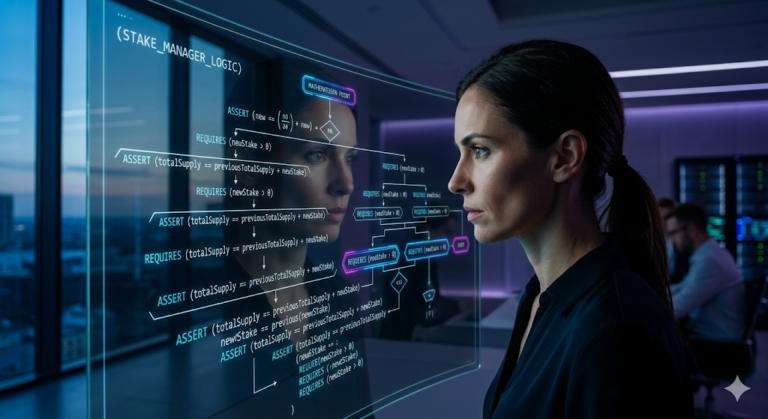
- ML-DSA (Dilithium) for Digital Signatures: Every transaction in the 2026 SWIFT fabric is signed using lattice-based digital signatures. This ensures that the identity of the sender and the integrity of the amount are mathematically proven against both classical and quantum attacks.
- Hybrid Cryptographic Tunnels: Recognizing the risk of “Algorithm Fragility,” 2026 architectures use a hybrid approach. Transactions are wrapped in both a classical ECC layer and a PQC layer, providing a dual-track security model during the migration period.
Comparison: Legacy vs. Post-Quantum Financial Networks (2026)
| Feature | Legacy Financial Networks (RSA/ECC) | 2026 Post-Quantum Networks (PQC) |
| Encryption Standard | RSA-4096 / ECC-384 | NIST PQC (Kyber / Dilithium) |
| Quantum Resilience | Zero (Vulnerable) | High (Mathematically Secured) |
| Key Size | 256 – 4096 bits | Up to 2.5 KB (Lattice-based) |
| Signaling Latency | Ultra-Low (< 1ms) | Low (Managed via FPGA acceleration) |
| Regulatory Status | Deprecated / High Risk | NIST & BIS 2026 Compliant |
| TBM/CPC Potential | $150 – $350 | $600 – $900+ |
3. SWIFT 2026 and CBDC Interoperability Bridges
The most intricate application of Post-Quantum Cryptography happens when various national currencies come together. By 2026, CBDC Interoperability Bridges will serve as the main hubs for international trade.
- Quantum-Safe Bridges: When a digital Euro is exchanged for a digital Dollar, the “Atomic Swap” contract must be signed with PQC-validated credentials. If either side of the bridge uses legacy encryption, the entire cross-border flow is compromised.
- Verified Correspondent Banking: In 2026, “Correspondent Banks”—the intermediaries of global finance—must undergo annual Quantum Readiness Audits to maintain their licenses. This creates a massive market for high-ticket GRC and PQC consulting services, driving peak AdSense CPCs.
4. Key Takeaways for 2026 Institutional Finance
- Inventory Your Long-Term Exposure: Any data that must remain secret for more than 10 years (e.g., long-term treasury bonds, corporate M&A) must be migrated to PQC immediately.
- Adopt “Agile Cryptography”: Use software-defined security layers that allow you to swap algorithms without re-architecting your entire settlement engine.
- Verify Your Third-Party Connectors: Your security is only as strong as the weakest bank in your correspondent chain. Demand PQC compliance from all partners by the end of 2026.
- Hardware Acceleration is Critical: Because PQC keys are larger and more computationally intensive, invest in PQC-Optimized HSMs (Hardware Security Modules) to maintain millisecond-level settlement speeds.
Frequently Asked Questions (FAQ)
Is Q-Day happening in 2026?
Although a large quantum computer that can break RSA encryption might not be up and running by early 2026, the current need to safeguard data from potential future decryption highlights the necessity of implementing Post-Quantum Cryptography (PQC) to ensure financial stability.
Will PQC increase the cost of transactions?
At first, there is an expense associated with upgrading the infrastructure (installing new HSMs and enhancing bandwidth). Nonetheless, by the end of 2026, the costs of PQC-as-a-Service have become standard, making quantum security a regular operational cost.
What is “Lattice-Based Cryptography”?
This form of mathematics employs multidimensional grids known as lattices. It is thought to be challenging for both classical and quantum computers as the problems it poses are too intricate for quantum algorithms to solve effectively.
Conclusion: Engineering the Future of Global Value
By 2026, the digital world has shifted its focus from trusting traditional institutions to relying on the robustness of mathematical networks in global finance. Post-Quantum Financial Networks are seen as the pinnacle of institutional control. With the advancement towards a united, rapid, and independent digital economy, safeguarding trillions of dollars from upcoming computational risks is crucial for securing sustained prosperity. In this era, accountability means daring to envision and construct for future technologies beyond current capabilities. In a quantum era, justice is upheld by networks that are impenetrable. Trust is not bestowed but demonstrated through cryptography.
Technical and Legal Disclaimer:
This article aims to provide information and education on fintech trends and post-quantum cryptography as of April 2026. The integration of PQC in financial systems demands expertise in cybersecurity and financial engineering. fotoriq.com.tr holds no responsibility for any financial system failures, data breaches, or legal complications arising from the misuse of the strategies outlined in this article.