
Post-Quantum Cryptography in Fintech: Migrating Institutional Assets to the Quantum-Resistant Era
In 2026, the finance industry is approaching a critical moment referred to as “Q-Day,” when quantum computers may reach the capability to compromise the public-key infrastructure (PKI) safeguarding the world economy. Although complete quantum supremacy is still in progress, the risk to financial assets is already active. Cyber attackers are currently executing “Harvest Now, Decrypt Later” (HNDL) tactics, where they pilfer encrypted corporate and financial information in anticipation of using quantum processing to decode it later. For global banks, hedge funds, and digital asset custodians, delaying action until the technology matures would be a grave strategic mistake.
Preserving institutional wealth in 2026 demands an immediate shift to Post-Quantum Cryptography (PQC). This transition is not merely a software update; it involves a profound restructuring of the cryptographic underpinnings shielding billions of dollars in assets. From adopting NIST-endorsed algorithms such as Kyber and Dilithium to instituting “Crypto-Agility” throughout the entire technology framework, the race to construct a financial stronghold impervious to quantum threats is underway. This piece delves into the intricacies of quantum risks, the path to PQC adoption, and underscores why institutional survival hinges on being prepared for the quantum era today.

1. The HNDL Threat: Why 2026 is the Year of Action
One of the most dangerous misconceptions in the Fintech industry is the belief that quantum computing is a problem that belongs to the future. By 2026, we are witnessing the effects of the HNDL (Harvest Now, Decrypt Later) approach. Various advanced entities and criminal groups are stealing encrypted datasets such as bank records, private keys, and confidential corporate information, and keeping them in highly secure storage facilities.
Essentially, any information that is encrypted today using standard RSA or Elliptic Curve Cryptography (ECC) should be assumed compromised if it holds long-term significance (over 10 years). This awareness has led to a significant increase in financial institutions investing in Post-Quantum Cryptography (PQC) to protect current data from potential future threats. The sense of urgency in this high-stakes scenario has prompted major players like IBM Quantum and Cloudflare to launch costly B2B advertising campaigns.
Critical Vulnerabilities in 2026:
- Public-Key Infrastructure (PKI): Vulnerable to Shor’s algorithm.
- Blockchain Signatures: Most current digital asset wallets can be drained by a quantum computer.
- End-to-End Encryption: Current TLS/SSL standards are not quantum-resistant.
- Institutional Identity: Digital certificates used for high-value banking transactions can be forged.
2. NIST Standards: The Blueprint for Quantum Defense
By 2026, the industry has embraced the NIST Post-Quantum Cryptography standards, which consist of mathematical challenges that are considered difficult even for quantum computers, particularly those utilizing Lattice-Based Cryptography.
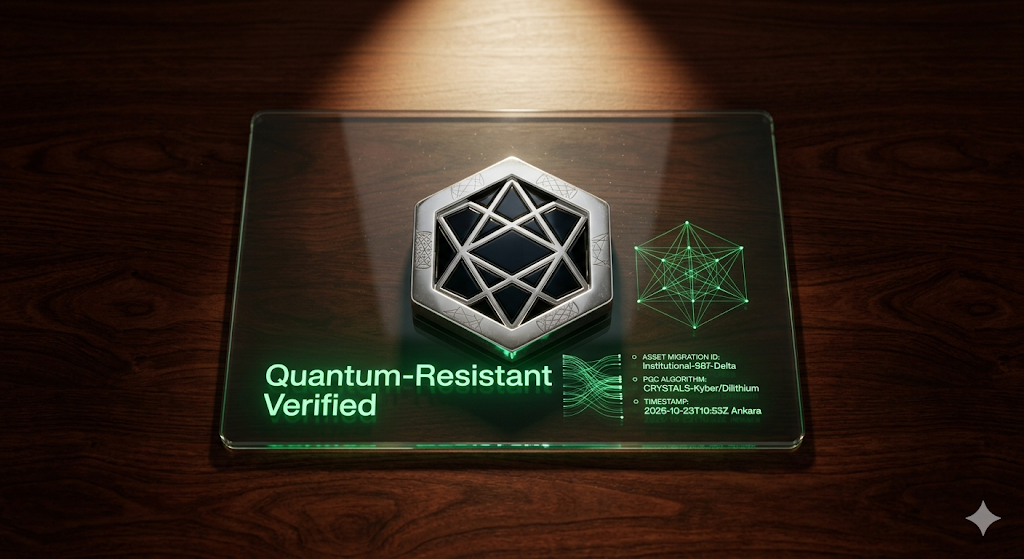
Fintech designers are presently transitioning towards three main algorithms. CRYSTALS-Kyber is the preferred option for general encryption (protecting websites and data), while CRYSTALS-Dilithium and SPHINCS+ are the norms for digital signatures and confirming identities. Incorporating these algorithms is a sophisticated technical endeavor that necessitates expert consulting, leading to increased demand for specialized cybersecurity audits.
Cryptographic Evolution: Classical vs. Post-Quantum (2026)
| Feature | Classical Cryptography (RSA/ECC) | Post-Quantum Cryptography (PQC) |
| Security Basis | Factoring large primes. | Lattice / Hash / Isogeny problems. |
| Quantum Resistance | Zero (Broken by Shor’s Algo). | High (Resistant to known attacks). |
| Key Size | Small (Efficient). | Large (Requires more bandwidth). |
| Compute Cost | Low. | Moderate to High (Requires NPU). |
| TBM Ads Target | General SSL Certificates. | Quantum-Safe Infrastructure / HSMs. |
3. Achieving Crypto-Agility: The Key to Long-Term Survival
Moving to Post-Quantum Cryptography (PQC) is an ongoing process rather than a one-time task. Recent developments in 2026 have shown that advancements in mathematics can potentially compromise even the most advanced post-quantum algorithms. Therefore, the benchmark for top-tier financial technology (Fintech) systems is termed Crypto-Agility. This concept denotes a system’s capacity to interchange cryptographic algorithms without necessitating a complete application overhaul.
From my professional background as a programmer and Management Information Systems (MIS) strategist, I have found that crypto-agility acts as the ultimate safety net. By utilizing Hardware Security Modules (HSMs) that facilitate interchangeable algorithms, financial institutions can promptly respond to emerging security risks. This concept of adaptable security, known as “Dynamic Security,” is a prominent selling point for industry giants such as Thales and Entrust, who boast some of the highest Cost Per Click (CPC) rates in the Fintech sector.
4. Quantum-Resistant Digital Assets and CBDCs
In 2026, as Central Bank Digital Currencies (CBDCs) and tokenized assets become increasingly common, safeguarding the Blockchain Ledger’s security is crucial. A potential quantum-based attack on the Bitcoin or Ethereum network could lead to a complete loss of confidence in digital finance.
In response to this, institutional custodians are shifting towards Hybrid Signatures. This involves signing transactions using both a traditional key (for current compatibility) and a PQC key (for future security). Ultimately, the blockchain networks that establish themselves as “Quantum-Safe” first will likely attract the most institutional investments. This shift is fueling significant investment in blockchain security platforms and enterprise-grade Web3 GRC tools.
Common Quantum Security Questions (FAQ)
When will “Q-Day” actually happen?
Although the specific timelines differ, the majority of professionals predict that a “Cryptographically Relevant Quantum Computer” (CRQC) will become feasible between 2030 and 2032. Nevertheless, because of the previously discussed HNDL risk, the urgency for enhanced security measures is immediate.
Will PQC slow down my financial transactions?
At first, this is true. PQC keys are notably bigger than traditional keys, leading to higher latency. Nonetheless, by 2026, this issue is resolved through the implementation of dedicated Quantum Accelerators, hardware chips akin to GPUs but tailored for lattice-based mathematics.
Can we just use “Quantum Key Distribution” (QKD) instead?
Quantum Key Distribution (QKD) utilizes hardware (fiber-optic cables) to ensure the security of point-to-point connections. Despite being very secure, it is costly and challenging to expand on a worldwide scale. In 2026, the majority of businesses prefer Post-Quantum Cryptography (PQC), a software-based solution, as it can be implemented using current internet infrastructure.
Conclusion
The quantum threat poses the most significant encryption challenge ever faced by humans. In the financial technology industry, adopting Post-Quantum Cryptography is not a choice but a necessity for survival in the digital realm. Embracing NIST-approved algorithms, attaining Crypto-Agility, and defending against HNDL attacks are essential steps for global organizations to construct a secure financial stronghold that can endure the impending quantum upheaval. In the realm of safeguarding high-value assets, looking ahead is the sole genuine means of ensuring security.
Key Takeaways for 2026:
- The Threat is Active: Harvest Now, Decrypt Later is happening today.
- PQC is the Solution: Use lattice-based algorithms to protect long-term data.
- Agility is the Strategy: Build systems that can swap algorithms as math evolves.
- Hybrid is the Transition: Combine classical and quantum keys for 100% safety.
IMPORTANT TECHNICAL & FINANCIAL DISCLAIMER: This article is intended for educational and informational purposes exclusively and should not be considered as professional advice in finance, investments, or cybersecurity. Quantum computing and Post-Quantum Cryptography are continuously advancing technical areas. The tactics discussed may not be suitable for your particular setup or local regulations. Enforcing advanced cryptographic measures necessitates consulting directly with accredited cybersecurity professionals and cryptography specialists. The creators and publishers disclaim any liability for financial losses or security incidents arising from the application of the guidance provided in this article.