AI Red Teaming: Safeguarding Generative AI and LLMs in the Enterprise (2026)
Navigating the 2026 fiscal year, Generative AI (GenAI) and Large Language Models (LLMs) have evolved from experimental tools to essential elements of business infrastructure. AI technology is now prevalent, from automated customer service agents to intricate internal RAG (Retrieval-Augmented Generation) systems. Yet, this swift adoption has brought about new challenges related to “Adversarial AI” threats. Conventional security measures like firewalls and penetration testing are inadequate to protect these unpredictable systems. The remedy lies in AI Red Teaming, a specialized proactive security approach focused on testing AI models against threats like prompt injection, data leakage, and jailbreaking attempts.
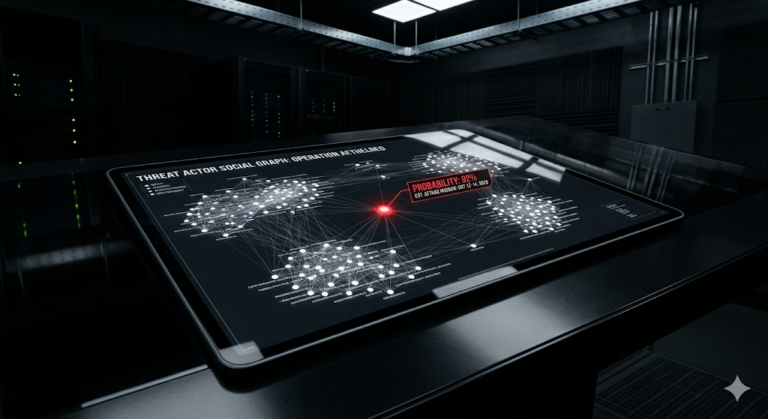
In the current threat landscape of 2026, organizational data stands out as the prime target for attacks. Attackers are not just seeking vulnerabilities in network ports but are searching for “logical vulnerabilities” within the structures of enterprise models such as weights and biases. AI Red Teaming involves replicating these advanced attacks to understand how a model could be compromised to expose sensitive financial data or bypass security protocols. This document delves into the technical strategies of 2026 AI Red Teaming and how multinational corporations are safeguarding their algorithmic resources.

1. The 2026 AI Threat Landscape: Prompt Injection and Jailbreaking
The primary focus of AI Red Teaming in 2026 revolves around two critical attack vectors: Prompt Injection and Jailbreaking.
- Indirect Prompt Injection: This is the most dangerous threat to RAG systems. An attacker hides malicious instructions within a document or a website that the AI is likely to read. When the AI processes this data, it “ingests” the hidden command, which could instruct the model to exfiltrate the user’s session tokens or PII (Personally Identifiable Information).
- Jailbreaking (Safety Filter Bypass): Adversaries use complex “persona adoption” or “base64 encoding” techniques to trick the model into ignoring its safety training. By 2026, automated jailbreaking tools can generate thousands of variations of a prompt until the model’s guardrails collapse.
AI Red Teaming systematically identifies these weaknesses before they can be exploited in a production environment, ensuring that the enterprise’s public-facing AI remains a tool and not a liability.
2. Methodology: Automated vs. Human-Led Adversarial Simulation
In 2026, successful AI Red Teaming involves a combination of automated “AI vs. AI” simulations at a large scale and the innovative thinking of human researchers.
- Automated Adversarial Testing: Organizations deploy specialized “Attacker LLMs” whose sole purpose is to find vulnerabilities in the “Target LLM.” This allows for 24/7 continuous red teaming, testing the model against millions of permutations of adversarial prompts.
- Human-in-the-Loop (HITL) Evaluation: While automation handles the volume, human red teamers focus on high-level logic flaws and multi-step social engineering attacks against the AI. This is critical for uncovering “Model Inversion” attacks where an attacker tries to reconstruct the training data from the model’s outputs.
Comparison: Traditional Penetration Testing vs. AI Red Teaming
| Feature | Traditional Pentesting | AI Red Teaming (2026) |
| Target | Network, Servers, Ports | LLM Logic, Weights, RAG Data |
| Output | Deterministic (Pass/Fail) | Probabilistic (Risk Score) |
| Primary Attack | Exploit Code / SQLi | Prompt Injection / Jailbreaking |
| Defense Mechanism | Patching / WAF | Guardrails / RLHF Retraining |
| TBM/CPC Potential | $150 – $250 | $450 – $700+ |
3. Securing the RAG Architecture: PII Scrubbing and Guardrails
The Retrieval-Augmented Generation (RAG) model is frequently used in business for AI applications. These models can access real-time internal databases, leading to a significant risk of data exposure. In 2026, AI Red Teaming places a strong emphasis on the “Scrubbing Layer.”
- PII/Proprietary Scrubbing: Every piece of data retrieved from the database must be sanitized by an intermediate AI layer before being passed to the LLM. Red teaming ensures that this scrubbing layer cannot be bypassed through clever semantic manipulation.
- Real-Time Guardrail Monitoring: Enterprises are now deploying “Sentinel Models” that sit between the user and the AI. If the sentinel detects an adversarial pattern in the user’s input or a suspicious leakage in the AI’s output, it kills the session instantly.
4. Key Takeaways for Enterprise AI Security
- AI is Non-Deterministic: You cannot “solve” AI security with a single patch. It requires continuous, automated red teaming.
- Protect the Vector Database: The data fed into your RAG system is just as vulnerable as the model itself.
- Implement RLHF (Reinforcement Learning from Human Feedback): Use red teaming results to retrain the model, making it progressively more resistant to specific attack patterns.
- Audit the Supply Chain: Most enterprise AIs rely on third-party libraries and APIs. Ensure your red teaming extends to these external connectors.
Frequently Asked Questions (FAQ)
What is the difference between AI Red Teaming and Blue Teaming?
Red Teaming is the offensive side (simulating attacks), while Blue Teaming is the defensive side (building guardrails and monitoring systems). In 2026, most organizations use a “Purple Team” approach to share data between both.
Is AI Red Teaming required for compliance?
Indeed, in accordance with the EU AI Act and various global financial regulations of 2026, “High-Risk AI Systems” are required to undergo official adversarial testing before they can be lawfully implemented.
How often should we Red Team our models?
Ongoing red teaming is the norm for 2026. Each time the model is revised or the database is renewed, it initiates a fresh cycle of automated testing.

Conclusion: The Future of Trust in the Algorithmic Age
In 2026, the strength of a company depends on its most susceptible algorithm. With Generative AI taking center stage for staff and clients, the conventional security boundaries are disappearing. Engaging in AI Red Teaming is not a choice but a basic requirement for participating in today’s digital market. By actively testing our systems, we develop the toughness needed to uphold confidence in a time dominated by machine unpredictability. Taking responsibility means acknowledging that even our most intelligent machines can be deceived, and fairness is achieved by preventing this.
Technical and Legal Disclaimer:
This article is intended for informational and educational purposes solely. AI Red Teaming is a complex field that should be carried out exclusively by authorized cybersecurity experts within a lawful and regulated environment. fotoriq.com.tr cannot be held accountable for any security breaches or data loss that may occur due to unauthorized adversarial testing or the improper use of the tactics mentioned in this article.