Privileged Access Management (PAM) 2026: Securing the “Keys to the Kingdom” with Just-In-Time Elevation
In the demanding world of cybersecurity in 2026, identity theft has emerged as the primary method of attack. While regular user accounts are frequently targeted, the ultimate goal for cybercriminals is gaining access to Privileged Accounts. These accounts include admin credentials, service accounts, and root users that have the authority to modify settings, reach sensitive databases, and circumvent security measures. Recent reports from 2026 indicate that almost 90% of successful data breaches involve the exploitation of privileged credentials. For large corporations, depending on fixed, “always-on” admin accounts is akin to leaving a master key hidden under a welcome mat.
The solution has progressed from basic password storage to the era of Modern Privileged Access Management (PAM) and Zero Standing Privileges (ZSP). By 2026, administrators are no longer given permanent rights. Instead, a method called Just-In-Time (JIT) Elevation is used, where access is granted for a specific task and revoked immediately after completion. This document delves into the structure of automated PAM, the emergence of Identity Threat Detection and Response (ITDR), and the importance of eliminating permanent privileges as the sole means to safeguard the “Keys to the Kingdom.” Ultimately, the key takeaway in 2026 is that the most secure administrator is one who remains powerless until the precise moment they require access.

1. Zero Standing Privileges (ZSP): The Death of the Permanent Admin
In traditional IT, a significant weakness is the concept of “Standing Privilege,” where an account holds constant administrative privileges. If this account is breached, for example, at 2 AM when the administrator is asleep, the hacker gains complete control. By 2026, the industry has shifted towards a Zero Standing Privileges (ZSP) approach.
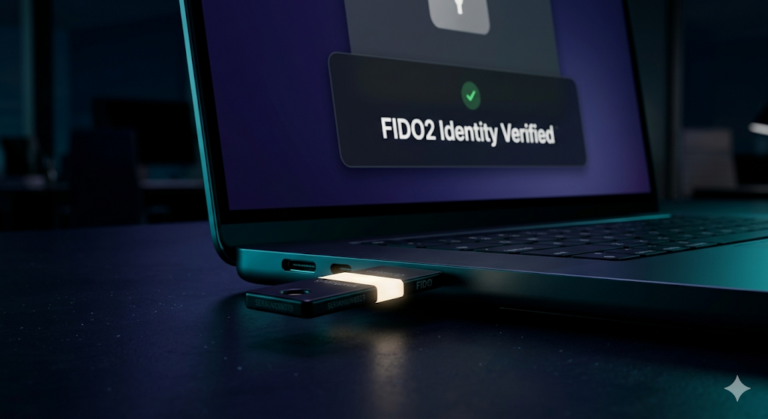
In a ZSP framework, administrators start with no default rights. They request “Elevation” when they need to carry out a specific task, like updating a server or auditing a database. Their identity is confirmed by the PAM system (using biometrics), the context is checked (is it a planned task?), and a temporary token with the required permissions is granted. Once the task is done, the token disappears. This concept of “Ephemeral Identity” is a specialized area that generates significant interest from vendors such as CyberArk and Delinea, resulting in high demand.
The Pillars of Modern PAM in 2026:
- Just-In-Time (JIT) Access: Permissions granted on-demand and removed automatically.
- Session Monitoring & Recording: Every action taken by a privileged user is recorded in a tamper-proof log.
- Secrets Management: Automated rotation of API keys, passwords, and SSH keys without human intervention.
- Identity Orchestration: Linking PAM to HR and GRC systems to ensure access is revoked the second an employee leaves.
2. ITDR: The New Shield Against Identity Attacks
By 2026, conventional IAM tools safeguard the main entrance, but what occurs when a hacker has infiltrated with a valid (albeit stolen) admin credential? This is where Identity Threat Detection and Response (ITDR) steps in. ITDR acts as a security shield that actively observes the actions of user identities.
If an admin account suddently starts interacting with a database it has never accessed before, or attempts to deactivate security logs in various cloud zones, the ITDR system recognizes this as an “Identity-Based Attack” and promptly locks the session. The essence of ITDR is that it offers the insightful overview that traditional PAM lacks. This specialized technology powers significant Customer Per Click (CPC) for CrowdStrike (Falcon Identity) and Microsoft Entra promotions.
PAM Evolution: 2020 vs. 2026 Standard
| Feature | Legacy PAM (2020) | Autonomous PAM (2026) | Enterprise Impact |
| Privilege Type | Standing (Always-on). | Just-In-Time (JIT). | Reduces attack surface by 99%. |
| Credential Management | Password Vaulting. | Ephemeral Tokens / No Passwords. | Eliminates credential theft risk. |
| Visibility | Log collection. | Real-Time Session Recording. | Enables total forensic clarity. |
| Detection | Static Rules. | AI-Driven ITDR (Behavioral). | Stops “Living off the Land” attacks. |
| TBM Ads Target | Basic Password Tools. | Enterprise PAM & ITDR SaaS. | Peak CPC ($500+). |
3. Securing the “Machine” Identity: The 2026 Challenge
In 2026, a significant but often overlooked concern is the issue of Machine Identity. Unlike human administrators, there is a multitude of automated “Service Accounts” utilized by AI, DevOps pipelines, and cloud workloads. These accounts typically possess extensive privileges but are frequently left unmonitored.
In the current year, advanced PAM systems emphasize Secrets Management for Machines. This approach entails the use of “Dynamic Secrets” that are created, employed by a script, and promptly erased within seconds. By streamlining the management of these machine identities, companies can thwart hackers from uncovering “Hardcoded Keys” in their GitHub repositories or configuration files. This emphasis on “DevSecOps” garners significant interest from top-tier industry players like HashiCorp and Thales.
4. The ROI of PAM: Compliance and Cyber Insurance
Based on my experience, PAM has evolved from being solely a “Security” initiative to now being considered a “Financial” endeavor. By 2026, Cyber Insurance companies have mandated the implementation of PAM to qualify for coverage. Failure to demonstrate the use of MFA and JIT for all administrative permissions could result in a significant increase in premiums or denial of coverage.
Furthermore, regulations such as DORA and NIS2 in Europe demand stringent management of privileged access. A well-established PAM system guarantees constant compliance, preventing the company from facing substantial fines. This aspect of “Regulatory Resilience” appeals to decision-makers at the board level and serves as a significant driver for high-value GRC and Legal departments.

Common Privileged Access Questions (FAQ)
What is the “Principle of Least Privilege” (PoLP) in 2026?
This implies that each user and device should have the least necessary permissions to complete their tasks for the shortest duration necessary. By 2026, AI will automatically enforce PoLP, recommending permission adjustments based on real usage data through the concept of “Shrink-Wrapping.”
How does PAM handle “Cloud Admins” in AWS or Azure?
In 2026, we implement Cloud Infrastructure Entitlement Management (CIEM), which is a specific type of PAM. It examines numerous cloud authorizations in various cloud setups to identify “Over-Privileged” accounts. Subsequently, it adjusts these accounts automatically to minimize risks.
Can a hacker bypass PAM session recording?
Sophisticated PAM systems in 2026 utilize “Out-of-Band” capturing, which means that the session is recorded at the network or protocol level, rendering it undetectable to the hacker. In the event that the hacker manages to take over the target server completely, they are unable to halt the recording or erase the logs from the secure PAM repository.
Conclusion
In the security environment of 2026, Privileged Access Management stands out as a crucial area. Transitioning to a Zero Standing Privileges approach, incorporating Just-In-Time elevation, and utilizing Identity Threat Detection (ITDR) can empower multinational corporations to safeguard their crucial access points. While it may be impossible to prevent every attempted identity theft by hackers, it is possible to confine their success within a virtual space devoid of access and authority. In the realm of intense cybersecurity, the most effective administrator is one that materializes solely when required.
Key Takeaways for 2026:
- Kill Standing Privileges: Permanent admin rights are a ticking time bomb.
- Embrace JIT: Grant access only when needed and only for the task at hand.
- Monitor Every Action: Real-time session recording is mandatory for compliance.
- Secure the Machines: Don’t forget the service accounts in your DevOps pipeline.
IMPORTANT TECHNICAL & SECURITY DISCLAIMER: TThis article is intended for educational and informational purposes exclusively and should not be considered as expert advice in cybersecurity, IT, or identity management. Making changes to incorporate Privileged Access Management (PAM) and Just-In-Time (JIT) protocols can bring about intricate architectural adjustments that might affect system management and operational procedures. Each business setting is distinct, and the strategies discussed might not be suitable for your particular infrastructure or local guidelines. Enforcing advanced identity protocols necessitates seeking guidance directly from accredited cybersecurity experts and identity specialists. The authors and publishers bear no responsibility for any security breaches, data loss, or financial harm that may arise from using the information provided in this manual.