Cyber Vaulting and Air-Gapped Resilience: The Final Frontier of Ransomware Defense in 2026
In the highly interconnected corporate world of 2026, the traditional idea of a “backup” is no longer sufficient. Cyber attackers have moved beyond just encrypting data to a more complex tactic known as Triple Extortion. In this method, they not only encrypt data but also destroy online backups, steal sensitive information, and cripple infrastructure all at once. When a hacker acquires “Super-Admin” privileges, every device linked to the network becomes vulnerable. To withstand such intense attacks, organizations must not solely depend on interlinked systems. The key to survival lies in transferring the most vital data to a location that is concealed and isolated from the primary network: The Cyber Vault.
By 2026, Cyber Vaulting and Air-Gapped Recovery have become essential practices for financial institutions, healthcare facilities, and critical infrastructure. Unlike traditional offsite storage, a Cyber Vault employs a “Physical or Logical Air-Gap” that briefly opens to receive data before closing securely. This segregated setting, combined with integrity checks powered by artificial intelligence, guarantees that even if your main network is completely compromised, a pristine, unaltered copy of your company’s crucial data, known as the “Golden Records,” remains safeguarded. To sum up, in 2026, your “Vault” is the critical barrier between a controllable emergency and complete corporate annihilation.
1. The Physics of Security: Understanding the Air-Gap
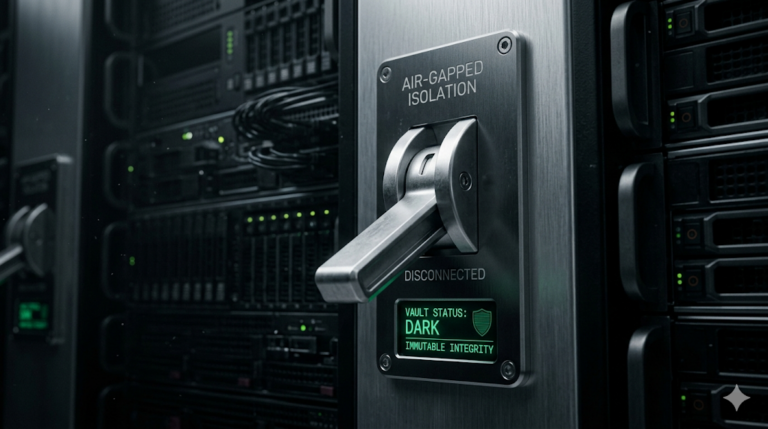
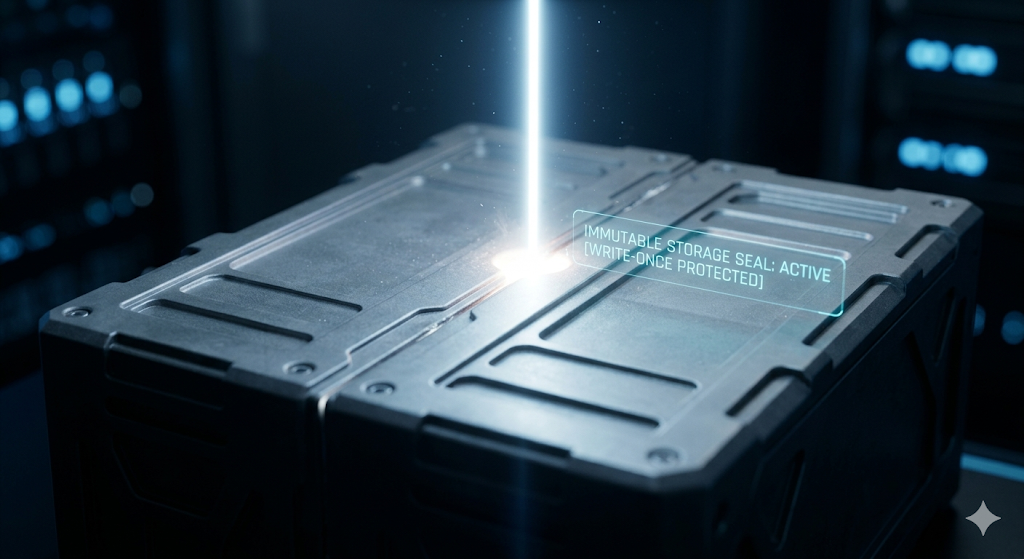
The “Air-Gap” serves as a powerful defense in a world where autonomous AI attacks are prevalent. Essentially, it involves ensuring there is no connection, whether physical or logical, between the main operating system and the backup storage. By 2026, we are implementing Automated Operational Air-Gaps, which consist of secure one-way channels that are only active during data transfers. Once the transfer is finished, this connection is completely cut off.
One of the key advantages of the “Invisible” vault is its covert nature. When a hacker scans a network, they can locate servers, cloud storage, and regular backup devices, but they are unable to detect the vault due to its isolated state. This level of separation is a specialized feature highly valued by major enterprise storage companies such as Dell (PowerProtect Cyber Recovery) and IBM, leading to increased demand and profitability.
The Pillars of a 2026 Cyber Vault:
- Isolation: No persistent network connection between the vault and the production site.
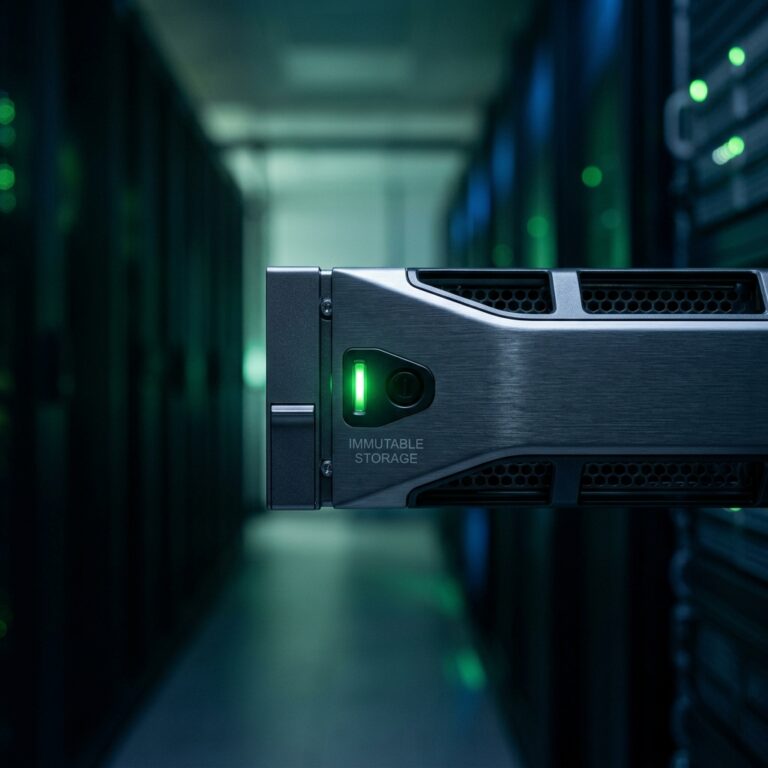
- Immutability: Once data enters the vault, it is locked with hardware-level WORM (Write Once, Read Many) technology.
- Independence: The vault has its own separate Identity and Access Management (IAM) system, meaning compromised corporate credentials won’t work inside the vault.
- Integrity Analytics: Using AI to scan data before it enters the vault to ensure no dormant ransomware “sleeper cells” are being stored.
2. CyberSense: The AI-Brain of the Vault
A vault containing corrupted data serves no purpose. By 2026, the top standard for secure storage involves incorporating AI-Driven Integrity Analytics, known as CyberSense technology. As data is housed in the vault, AI conducts a thorough, detailed examination of the file structures and metadata.
The AI specifically seeks out “Entropy Shocks” – abrupt alterations in file formats or extensive encryption patterns that signal a ransomware attack was in progress prior to the backup. If any irregularity is detected, the AI notifies the security team and stops the corrupted data from replacing the clean “Golden Copy.” This validation process, known as “Clean-Room,” enables businesses to restore their data with full confidence, a service that is highly sought after and comes at a premium in the disaster recovery industry.
Disaster Recovery vs. Cyber Recovery (2026 Standard)
| Feature | Standard Disaster Recovery (DR) | Advanced Cyber Recovery (Vault) |
| Connectivity | Persistent / Online. | Isolated / Air-Gapped. |
| Data Integrity | Limited scanning. | Deep AI Heuristic Analysis. |
| Access Control | Shared Corporate IAM. | Separate “Black-Site” IAM. |
| Primary Goal | Natural Disaster / Hardware Failure. | Ransomware / Insider Threat. |
| TBM Ads Target | Cloud Storage. | Mission-Critical Cyber Resilience. |
3. The “Vault-to-Cloud” Paradox: Securing Hybrid Air-Gaps
For companies that have fully transitioned to cloud services, maintaining an “Air-Gap” presents a significant logical hurdle. By 2026, this challenge is addressed with Cloud-Native Vaulting, which involves transferring data to a distinct subscription or account known as a “Clean Room” that is completely isolated from the operational setup.
Essentially, the “Cloud Vault” leverages automated API shutdowns to replicate the concept of a physical air-gap. This specialized approach is gaining momentum as organizations aim to safeguard their AWS S3 or Azure Blob storage from potential “Account Takeover” (ATO) incidents. Articles discussing the shift from traditional on-premises setups to cloud vaulting are highly sought after, attracting substantial cost-per-click (CPC) rates from Amazon AWS (for Clean Room services) and Microsoft Azure.
4. Operational Recovery: The 24-Hour Goal
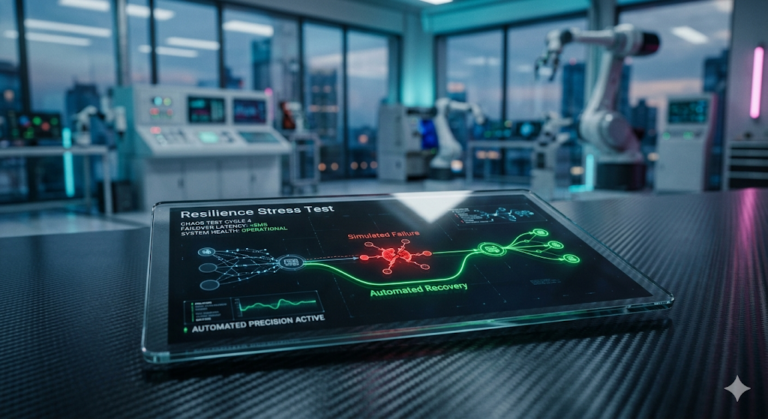
In 2026, the effectiveness of a Cyber Vault is assessed through the MTO (Minimum Time to Operate). Even if you possess the necessary data, a delay of two weeks to set up the servers for operation can put your business at risk. Contemporary vaulting solutions now incorporate “Automated Recovery Orchestration,” enabling the IT team to swiftly restore critical business functions like payroll, customer transactions, and logistics in a secure “Sandbox” environment within a few hours. Essentially, the vault acts as a “Lifeboat” while the primary environment is reconstructed. This “Operational Resilience” is a compelling selling point for top management and a significant factor in professional B2B advertising campaigns.
Common Cyber Vaulting Questions (FAQ)
How is a Cyber Vault different from “Offsite Backups”?
Offsite backups are essentially duplicates of your data stored in an alternate location, though they are frequently accessible via the internet and can be reached using the same network login details. In contrast, a Cyber Vault is segregated logically and equipped with its unique security measures. In the event of a breach in your primary network, there is a risk that your offsite backup could be erased, while your Cyber Vault would remain unscathed.
Is Cyber Vaulting too expensive for non-financial companies?
In 2026, what used to be considered a luxury, the “Cost of Downweight,” has become so significant that medium-sized manufacturing and retail companies are now using “Mini-Vaults” to protect their essential SQL databases and intellectual property. The return on investment is assessed based on the savings from avoiding ransom demands exceeding $10 million.
Can “Insiders” destroy the Cyber Vault?
In 2026, the most secure vaults now utilize “Multi-Person Authentication” (Quorum Authorization). This feature mandates that for any significant task to be executed, such as data deletion, three distinct authorized persons need to give their approval at the same time. This system effectively thwarts any attempt by a solitary discontented employee to compromise the organization’s ultimate security measure.
Conclusion
In the age of self-governing digital combat, the Cyber Vault stands out as the ultimate backup plan. By setting up an Automated Air-Gap, making use of AI-Powered Integrity Analytics, and upholding IAM Autonomy, organizations worldwide can protect their critical data from highly advanced ransomware attacks. While it’s impossible to stop every intrusion, having a Cyber Vault guarantees that any breach can be overcome. Resilience is more than just a product; it represents a structural dedication to ensuring your organization’s survival.
Key Takeaways for 2026:
- Disconnect to Protect: If it’s always online, it’s not a vault.
- Verify the Cleanliness: Use AI to scan data before you lock it away.
- Quorum Approval: Never give one person the “keys to the vault.”
- Practice the Restore: A vault you haven’t tested is just an expensive graveyard of data.
IMPORTANT TECHNICAL & SECURITY DISCLAIMER: The content in this article is meant for educational and informational purposes exclusively and should not be considered as expert advice in cybersecurity, IT, or disaster recovery. Cyber vaulting and air-gapped architectures are intricate setups that necessitate guidance from certified infrastructure architects and security experts. The approaches discussed might not be suitable for your particular regulatory or technical situation. The authors and publishers cannot be held liable for any data loss, security breaches, or financial losses arising from the application of the details provided in this publication.