Active-Active Architectures: Achieving Zero-RPO and Zero-RTO Resilience in the 2026 Enterprise
In the rapidly advancing digital world of 2026, the traditional concept of “Disaster Recovery” is no longer relevant. Major sectors such as finance, healthcare, and logistics now embrace Active-Active Resilience as the new standard. This approach involves having multiple data centers operating simultaneously across different locations, managing tasks in real-time to ensure high availability. The focus has shifted from mere recovery to achieving Perpetual Availability, with the aim of attaining Zero Recovery Point Objective (RPO) and Zero Recovery Time Objective (RTO) goals. This strategy guarantees that any major failure, be it a complete breakdown of the primary site or a sophisticated ransomware attack, goes unnoticed by end-users.
To establish an Active-Active infrastructure in 2026, organizations must revolutionize data replication methods and traffic management. This transformation involves employing Synchronous Replication over fast, low-latency connections, along with Global Server Load Balancing (GSLB) and advanced mesh-networking protocols. This overview delves into the technical prerequisites for constructing a continuously operational enterprise and demonstrates how these frameworks offer top-tier protection against the unpredictable nature of business operations in the mid-2020s.
1. The Death of the Failover: Understanding Zero-RPO and Zero-RTO
To understand the 2026 resilience landscape, we must redefine the core metrics of recovery:
- Zero-RPO (Recovery Point Objective): This means that at the moment of a failure, exactly zero data is lost. In 2026, this is achieved through synchronous write operations, where a transaction is not considered “committed” until it is written to both the primary and the secondary data center simultaneously.
- Zero-RTO (Recovery Time Objective): This means the time taken to recover service is zero seconds. In an Active-Active setup, the secondary site is already “hot” and processing traffic. If Site A falls, Site B simply continues to handle the load without any manual intervention or service restart.
In 2026, it is crucial for CIOs to aim for maximum resilience dubbed as “Zero-Zero” as anything less poses a considerable threat to the business. This is especially important with the rise of Multi-Stage Ransomware, where attackers target both the main data and its backup at the same time. Implementing Active-Active structures along with unchangeable data snapshots creates a robust “Living Record” that is hard to compromise.
2. Technical Pillars: Synchronous Replication and Low-Latency Fabric
Building an Active-Active mesh in 2026 is a triumph of networking and storage engineering. It relies on three critical technical pillars:
- Synchronous Storage Replication: For Site A and Site B to stay perfectly in sync, every write operation must occur across both sites over a dedicated dark-fiber or high-speed 2026-era satellite link. The latency must be kept below 5 milliseconds to ensure that application performance is not compromised by the “Commit” delay.
- Distributed Lock Management (DLM): In an Active-Active environment, two users might attempt to modify the same record at the same time on different sites. DLM ensures data consistency across the mesh, preventing “split-brain” scenarios where the two data centers drift into conflicting states.
- Intelligent Traffic Orchestration: 2026-level GSLB uses AI to monitor the health of each node. If Site A shows signs of a DDoS attack or a hardware bottleneck, traffic is seamlessly shifted to Site B with zero packet loss, utilizing Anycast networking and modern SD-WAN protocols.
Comparison: Active-Passive vs. Active-Active Architectures (2026)
| Feature | Active-Passive (Traditional) | Active-Active (2026 Standard) |
| Data Consistency | Asynchronous (Delayed) | Synchronous (Real-Time) |
| Resource Utilization | 50% (Secondary site is idle) | 100% (Both sites are productive) |
| Recovery Metric | RPO/RTO in Minutes/Hours | Zero-RPO / Zero-RTO |
| Complexity | Moderate | High (Requires Mesh Orchestration) |
| Ransomware Defense | Recovery from Backups | Continuous Immunity via Immutability |
| TBM/CPC Potential | $200 – $350 | $450 – $700+ |
3. Resilience Against Ransomware: The “Immutable Mesh” Strategy
By 2026, ransomware has evolved from being solely a concern for data to a significant issue affecting availability. Attackers now target disrupting an organization’s operations. To combat this, Active-Active setups incorporate Immutable Snapshots into the replication process.
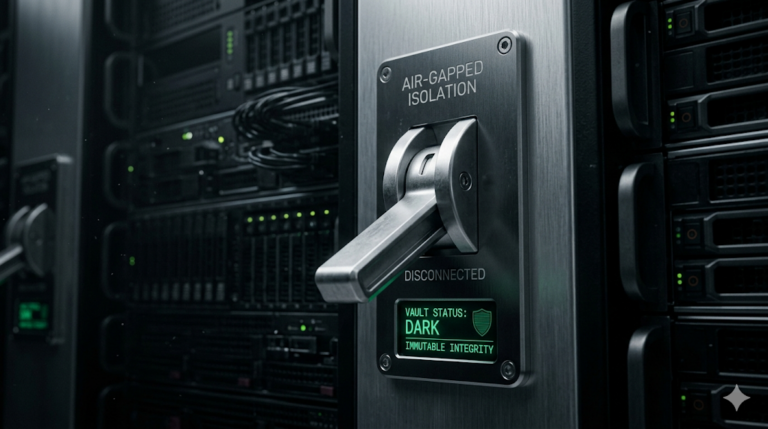
- Air-Gapped Replication: While the sites are Active-Active, a third “Siber Kasa” (Cyber Vault) receives an immutable, air-gapped stream of the data. Even if an attacker manages to corrupt the live mesh, the enterprise can “rewind” the entire Active-Active environment to a clean state minutes before the attack.
- Micro-Segmentation in the Mesh: By 2026, Active-Active sites are micro-segmented at the identity level. If a node in Site A is compromised, the automated orchestration system “quarantines” that node without taking down the rest of the mesh, ensuring the business stays online during a cyber-crisis.
4. Key Takeaways for 2026 Disaster Recovery Planning
- Latency is the Limit: Your Active-Active distance is limited by the speed of light. Ensure your data centers are within the 5-10ms “Synchronous Circle.”
- Eliminate the “Single Point of Failure”: An Active-Active setup is only as strong as its load balancers and network links. Use redundant, diverse carrier paths.
- Automate the Failover: Human intervention is the enemy of Zero-RTO. If your system requires a human to “push a button” to failover, you do not have an Active-Active architecture.
- Test Your Mesh: In 2026, “Chaos Engineering” is mandatory. Regularly inject simulated failures into your Active-Active mesh to prove that the system can heal itself in real-time.
Frequently Asked Questions (FAQ)
Is Active-Active twice as expensive as Active-Passive?
Although the infrastructure expenses are greater, Active-Active makes full use of all your hardware continuously. In an Active-Passive configuration, half of your investment remains inactive. The Total Cost of Ownership (TCO) in 2026 frequently leans towards Active-Active for demanding workloads that are costly.
What is the “Split-Brain” problem?
This situation arises when the connection between two active sites is lost, causing both sites to believe the other is inactive, resulting in conflicting data updates. In 2026 systems, a “Quorum” or “Witness” node located in a third place is utilized to avoid this issue.
Can Active-Active protect against a regional power outage?
Certainly! Yes, as long as your websites are on separate power networks and linked through a robust, high-speed network. This is the reason why futuristic “Sovereign Clouds” frequently employ Active-Active setups spanning various regions.

Conclusion: The Era of the Zero-Downtime Enterprise
In the digital world of 2026, experiencing “Downtime” is no longer just a technical glitch; it poses serious risks to reputation and finances. As businesses transition to high-availability networks, the distinction between “Live” and “Backup” systems has disappeared permanently. Active-Active designs now symbolize the highest level of contemporary resilience, providing a degree of robustness that was previously only seen in nuclear command infrastructures. By attaining Zero-RPO and Zero-RTO, large organizations are not only securing their data but also ensuring the continuous operation of the global economy. In 2026, accountability hinges on the commitment to uninterrupted business operations.
Technical and Legal Disclaimer:
This article aims to provide information and education on current enterprise disaster recovery and high-availability trends as of April 2026. Creating and executing Active-Active architectures demands specific engineering skills and thorough testing. fotoriq.com.tr is not responsible for any data loss, service disruptions, or hardware malfunctions that may occur due to the improper use of the high-availability methods outlined in this article.